





Early Buying Ahead of Primaries Is Gaining Momentum
One of the clearest trends we’re seeing is early investment well before traditional peak windows—especially tied to upcoming primary elections.
In states with 1H 2026 primary dates, buyers are already active across CTV and CTV OOH inventory rather than waiting for late-cycle congestion. i.e. Texas - District 10, 33, 35, & 48 as well as New York 12.
Early buyers include:
- Congressional and state-level candidates
- Issue advocacy organizations
- Policy-focused and government-related messaging
Why this matters:
Early placement allows campaigns to establish presence, test messaging, and secure premium video environments before demand accelerates and CPMs rise closer to Election Day.
Issue-Based Messaging Is a Major Driver of Early Spend
A significant portion of early activity is coming from issue advocacy and policy-focused advertising, including categories such as:
- Federal funding for medical and scientific research
- Healthcare affordability and regulation
- Technology, national security, and defense-related topics
- Environmental and regulatory issues
These messages often run alongside candidate advertising, signaling that CTV and CTV OOH are being trusted environments for complex, persuasion-adjacent topics, not just name recognition.
Geographic Targeting Is Central to the Strategy
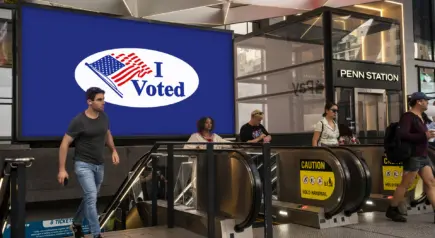
Rather than broad national exposure, early buyers are leaning into district- and state-specific deployment, particularly in competitive or high-visibility regions. This approach positions CTV OOH as:
- A reinforcement layer within key districts
- A way to extend CTV reach beyond the living room
- A tool for maintaining visibility in everyday, real-world environments
In practice, this means campaigns can surround voters with consistent video messaging across screens—both at home and on-the-go—within priority geographies.
Candidate and Issue Messaging Are Running Side by Side
Another notable pattern is the convergence of issue advocacy and candidate messaging within the same premium video ecosystems.
Across current activity, we’re seeing:
- Pro- and anti-issue messaging alongside electoral creative
- Support, contrast, and accountability messaging
- Advocacy groups reinforcing narratives that align with electoral outcomes
This reflects growing confidence in CTV and CTV OOH as environments that support message reinforcement—not just broad awareness.
Messaging Extends Beyond a Single Moment
CTV and CTV OOH are also being used after key moments—such as legislative actions, public announcements, or campaign milestones. Examples of this include:
- “Thank you” messaging following key actions
- Accountability or contrast creative
- Continued narrative reinforcement once attention is already earned
This suggests campaigns are increasingly viewing video OOH as a continuity channel, helping sustain momentum rather than turning visibility on and off.
The Bigger Picture
Taken together, these patterns point to a clear shift in how early political buyers are thinking about video.
CTV and CTV OOH are being used to:
- Enter the conversation earlier
- Reinforce messaging in specific states and districts
- Extend reach beyond the home screen
- Maintain presence across multiple phases of a campaign
As primary calendars approach in states like Texas and North Carolina, these early moves may offer a preview of how video strategies will evolve across the broader election cycle.